

All Rights Reserved by Toren & Associate 2025
Privacy Policy | Disclaimer

Why the Sell Out?
Why Shareholding, Cash Injections and Back Office Changes couldn’t save this legendary brand.
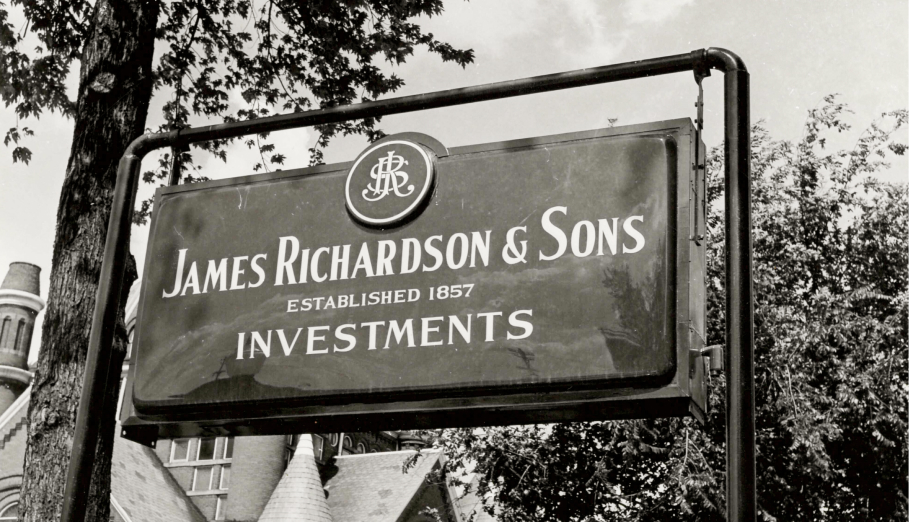
Richardson Wealth was the darling of the independent brokerage industry in Canada. It was widely considered the crème de la crème of established premium brokerage firms.
The brand was steeped rich in history and tradition, with owner-executives who were revered and respected. Back in the early 2000’s, it was the Go-To firm for the 100M+ advisor. Their bond was their word. Traditional values, trust, strong work ethic. Old fashioned values in an evolving world.
Back in my early advisor recruitment days, they were often my competition for top tier advisors.
How did it all go wrong?
Time and so much else had changed since. (in no particular order)
As early as 2004, although RW has been recruiting advisors on a consistent but sporadic basis: the evolving competitive brokerage market already put pressures on a brokerage firm with a very casual laissez faire culture. They may have been exclusive, but they were no longer the sole dominant brand. Other brands were fast emerging. Among them, Wellington West.
Consider this: Founded in 1857, (Older than the original telephone!) Richardson Wealth had been around for some 168 years with a total of 40B AUM.
In contrast, founded in 2017, Wellington Altus is only 8 years old. They have amassed 40B.
You know the old saying: ‘If you’re not growing, your shrinking’
That’s when you KNOW something’s very wrong!
For a multitude of reasons, the lack of advisor growth at RW affected both the health of its retained earnings and its subsequent ability to allocate growth capital on their own devices. This long-term occurrence affected both advisor growth and shareholder value. One determines the other.
This became a chicken and egg quagmire. To improve AUM, the firm had to use its own capital for advisor recruitment, thereby affecting shareholder earnings. Over time, this created much internal resentment for shareholder dividends and any liquidity for advisor exit/retirements.
The inability – reluctance to fund continuous advisor growth together with poor shareholder value, was one of the main sources of advisor frustration at the firm. This was publicly known for a long time: It became a major repellant for any advisor looking to make a transition.
If you were working at RW, that would be very difficult to overcome.
Having spoken with many Portfolio Managers the last couple of years, the back – office change to Fidelity was a major irritant and source of dissatisfaction for many RW brokers. That alone would not have been a dealbreaker. But in conjunction with the larger issues, it is the pile up of woes that was enough to break the camel’s back. Many advisors soon left after the Fidelity switch. On top of everything else, they had enough.
For more than ten years, RW Executive had been playing a double game with advisors and the investor market: Again, it was no secret. It was widely known they were looking to unload the firm while at the same time, assuring both existing advisors and the investor public that they were committed to the ‘long term future’ of the business. Nothing could be further from the truth. The mixed messages signalled poor vision and lack of trust.
Over the years, several ‘transactions’ were ‘imminent’ and then fell through due to retention bonuses or other issues. These fall offs became public rumour mills that were accepted as common knowledge. They assumed a life of its own.
These events only reinforced the general lack of trust in R W leadership. This in turn affected external recruitment. It became a vicious cycle: After all, what advisor would ever consider moving to a firm long rumoured to be for sale. Another ‘myth’ hard to dispel. Add this to the existing line up of pre-existing woes – and that adds up to something called plenty. Plenty of baggage I don’t need!
Through RW’s ongoing struggles with advisor recruitment, back-office issues, shareholding. growth capital: the firm embarked on an ad campaign to show “injections of growth capital” to attract advisors and the switch to Fidelity Clearing to demonstrate state of art back office technology systems.
Unlike other broker dealers recruiting advisors to scale the business, RW’s public attempts at advisor recruitment was a last-ditch move to drive major advisor recruitment to the firm in the hopes of creating quick asset growth and further shareholder value.
Since advisors had already started their exit, it was also done to avoid any further mass advisor exit, to avoid imminent doom.
By this late stage, it was too little too late.
Advisors are well read individuals. And the street is small.
Although the firm had a pristine reputation; years of minimal growth and occasional advisor hires only confirmed the notion that this public relations campaign was more of an existential drive for sheer survival.
News press of Richardson’s very litigation with early shareholders (2021) only showed that early advisors who wanted to exit, now realized the firm had a revised shareholding agreement. This resulted in two things: original equity partners could not exercise their original liquidity as they hoped/believed. But even more important, new advisors considering their transition options, could not trust a firm that was being sued by its own former employees. That was a major turning point in the firm’s decline.
While the firm reached an out of court settlement, the damage was already done. The trust and confidence was irrevocably broken. Any further attempts at advisor recruitment became a near Houdini futile escape.
Since Richardson was a public co, its share price was well known. And what stood out was the fact the share price had not appreciated in over 10 years. That’s a poor performing stock. This was a self-made calamity.
Like any other declining stock, the reasoning is very simple: as I always tell advisors-portfolio managers. If the share price of any public company has not appreciated over any reasonable period, why would you a) buy it and b) why would you ever consider working for it. Neither premiss made sense.
RW was a perfect example of a firm trapped in so many troubles, that it was a titanic ship about to sink. Only a sale would save it from eventual collapse. An even greater embarrassment.
Besieged with lack of long-term shareholder value, no confidence in leadership, poor asset growth and notable advisor exits – these factors all contributed to a firm that suffered death by a thousand cuts.
For many, the fact that such an esteemed firm like RW agreed to be sold to IA Private Wealth, is widely perceived as a real downgrade and betrayal of a once untouchable legendary brand. It only reflects the true lack of options they had. Their own dire situation was the cause of this rather shocking result.
Compared with other growing dealers, RW had very few hires and very notable advisor exists. The advisors who left had significant AUM. That in itself was another major public relations disaster. The more whom left, only resulted in yet more questions, suspicion and general non confidence in the firm overall.
Even though Richardson Wealth will preserve its name under the transaction, the ownership change is known and must be disclosed to clients. How long the brand will be preserved remains another big question. Standard M&A practice normally dictates that the brand often changes over time.
For any advisors-portfolio managers now having to spin the new transition, ie; asking the clients to move from an esteemed legacy brand to a relative unknown brand in the investor marker: that dubious narrative may be the biggest gamble of their professional career.
The legendary 3 Macs (aka, MacDougall MacDougall MacTier) was another crusty but well respected venerable independent.
After some 177 years in business, the firm amassed a paltry 6B AUM spread among 70 brokers. Not much to show for being in business almost two centuries. In 2016, they got sold to Raymond James Limited.
Although the reasons for the sale of 3 Macs were very different from Richardson, 3 Macs lacked the discipline and desire to reinvest profits to retained earnings.
The net result was the inability to fund advisors with signing bonuses.
Leaving minimal to no retained earnings simply means the firm will never grow due to insufficient growth capital. It’s that plain and simple.
This is not about the right of Executive – Shareholders alike to withdraw the dividends they choose. But lack of fiscal discipline carries grave consequences. It will often necessitate the accelerated sale of the business.
The sale of any firm to another well-respected brand (of like quality) is not just good public relations. Nor is it the preservation of owner pride and reputation: It is every bit about the smooth advisor transition being consistent with its long rich past.
A well-respected firm will often seek out a buyer with similar heritage and brand/reputation. This common reputational alignment is critical to the successful asset retention and sanctity of the transaction.
The very caliber of firm you sell to will ultimately determine the success of its outcome.
How you run a business together with firm fiscal discipline will always determine the end story. And not every story has a happy ending!
My take: Doubling your share value doesn’t begin to compensate for the end of a 168-year-old wealth management brand. Like the Bay / Eatons, it’s a sad ending for another great legacy.
Mark Toren
President & CEO
Toren & Associates

Your Trusted Partner Shaping Leadership
All Rights Reserved by Toren & Associate 2025
Privacy Policy | Disclaimer